
Rich County Bench Warrants Explained
In Utah, a bench warrant is a court order that can follow a missed appearance or another failure to comply with the court's instructions. Traffic citations bring many people in Rich County to this question, though the real trigger depends on the case and the court that holds it. A warrant can also follow some other missed court step. Not every warrant is a traffic matter. When you call Rich County Court at 435-793-2415, ask which division has the file, whether the docket shows an active warrant, and what the clerk tells you to do next. A statewide warrant lookup has its uses. The clerk still holds the current record, and that record governs.
Rich County Bench Warrants Can Start With Traffic
Rich County sends citation searches and eligible payments through Utah ePayments. The court's own page warns that a citation may take five days to show up, and it tells you to call if it never appears. A late payment or a missed hearing can raise a bench-warrant question, but a payment screen by itself does not prove the court recalled an order. Utah Rule of Criminal Procedure 4B covers citation appearances and says a failure to appear may lead to a bench warrant. Keep the citation and any payment receipt. Then ask the clerk whether the case has a hearing date, an added amount, a warrant entry, or another approved resolution. The linked Utah Rule 4B sets the statewide citation procedure that Rich County Justice Court uses. It does not show any person's case.
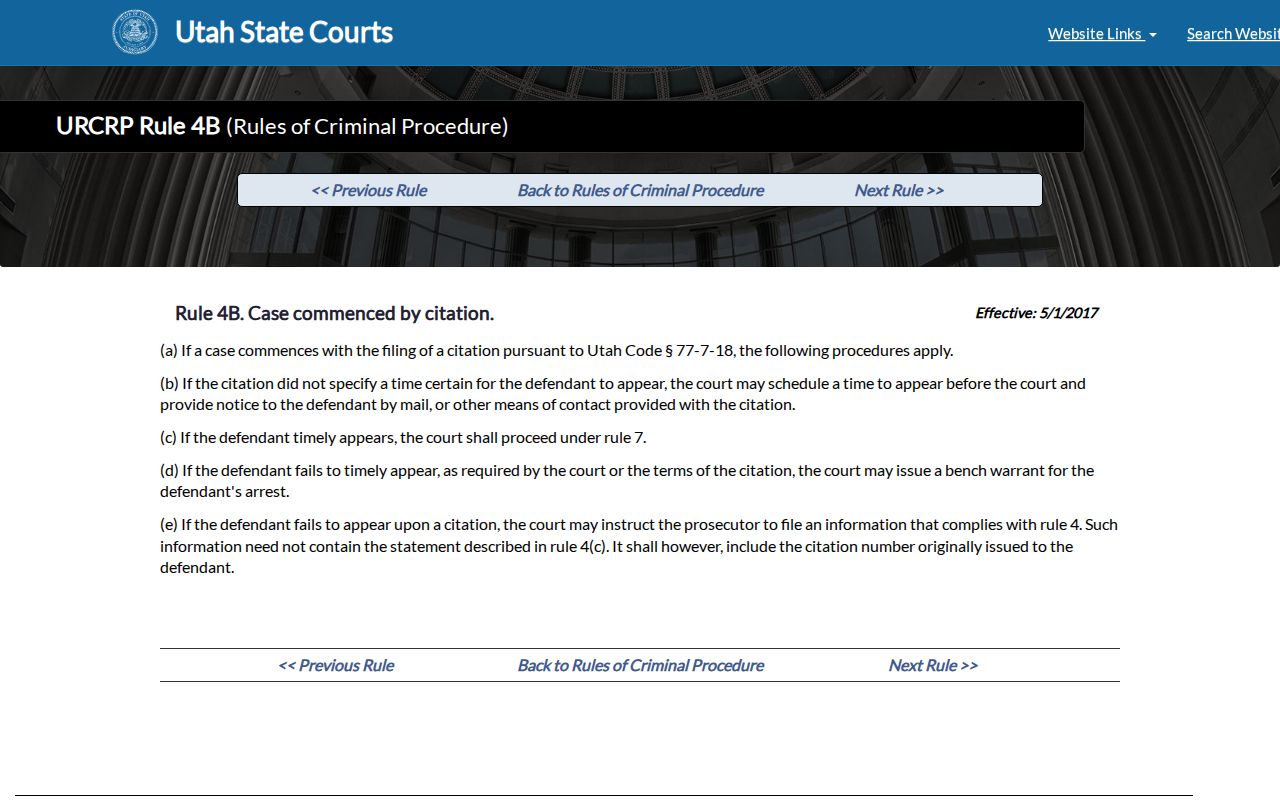
Read that rule beside the court notice, because the docket and case category decide the next step in Rich County.
How Rich County Bench Warrants Are Issued
In a Justice Court citation case, Utah procedure gives you a window to appear and lets the court act when the required payment or appearance never happens. Utah Code section 77-7-19 and Utah Rule of Criminal Procedure 4B spell out the consequences of a citation. The order comes from the court, not from a website or a records request. Timing for justice and juvenile cases also appears in UCJA Rule 4-701, which sets a $50 delinquency addition after 14 days and a $75 addition after 40 days, with a warrant process built into its framework. Check the citation, the date, and the case type with the clerk before applying any of that to your balance. The linked Utah Rule 4-701 lays out that statewide timing process. Rich County publishes no separate local deadline chart.
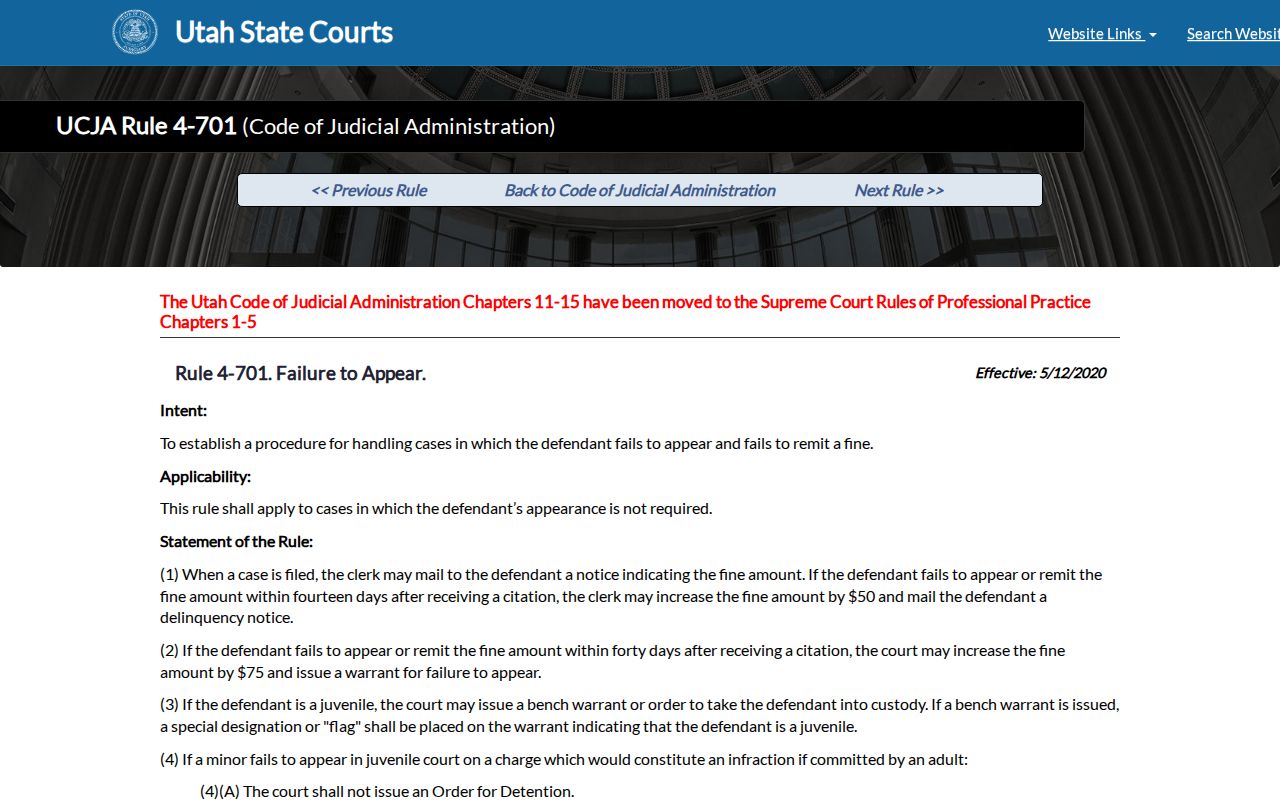
Never use an online summary to compute a balance or assume a Rich County warrant's current status.
Utah Timing Rules Shape a Rich County Warrant
A case can travel from citation to missed appearance, then to a court order, and later to service or recall. The route depends on what the notice required: payment, a court appearance, or some other response. Rich County's court page also lists Deferred Traffic Prosecution and plea in abeyance as possible options, subject to eligibility and court approval. Keep the terms straight. FTA means failure to appear. Delinquency is an added amount under the applicable rule. Recall means the issuing court withdraws an active order. None of them promises that payment alone ends the warrant. Ask the clerk what the docket says today.
Citation or order → response due → court review → warrant may issue → court-approved resolution or recall.
Bench Warrants and Arrest Warrants Compared
A bench warrant grows out of court process, such as a missed appearance or a failure to comply. An arrest warrant rests on a judge's review of a probable-cause request in a criminal case. Both can authorize custody. The reason, the file, and the next court step still differ.
| Question | Bench warrant | Arrest warrant |
|---|---|---|
| Why issued | Missed court duty or another court order | Probable-cause process tied to a criminal matter |
| Who controls it | The court handling the missed obligation | The court that reviewed and issued the warrant |
| What to ask | FTA status, hearing, recall motion, or payment option | Case route, counsel, appearance, and release terms |
Rich County applies Utah court rules to both warrant types. A bench-warrant entry alone does not mean a new charge exists.
Old Rich County Bench Warrants May Have a Review Route
Utah UCJA Rule 4-703 describes a review process for outstanding citations and bench warrants in sufficiently old matters. It can involve a show-cause path and dismissal review. That is not automatic amnesty, and it does not clear every warrant. The Rich County court clerk can tell you whether a file could qualify. The linked Rule 4-703 text is a public reference for the review process; it contains no local case.
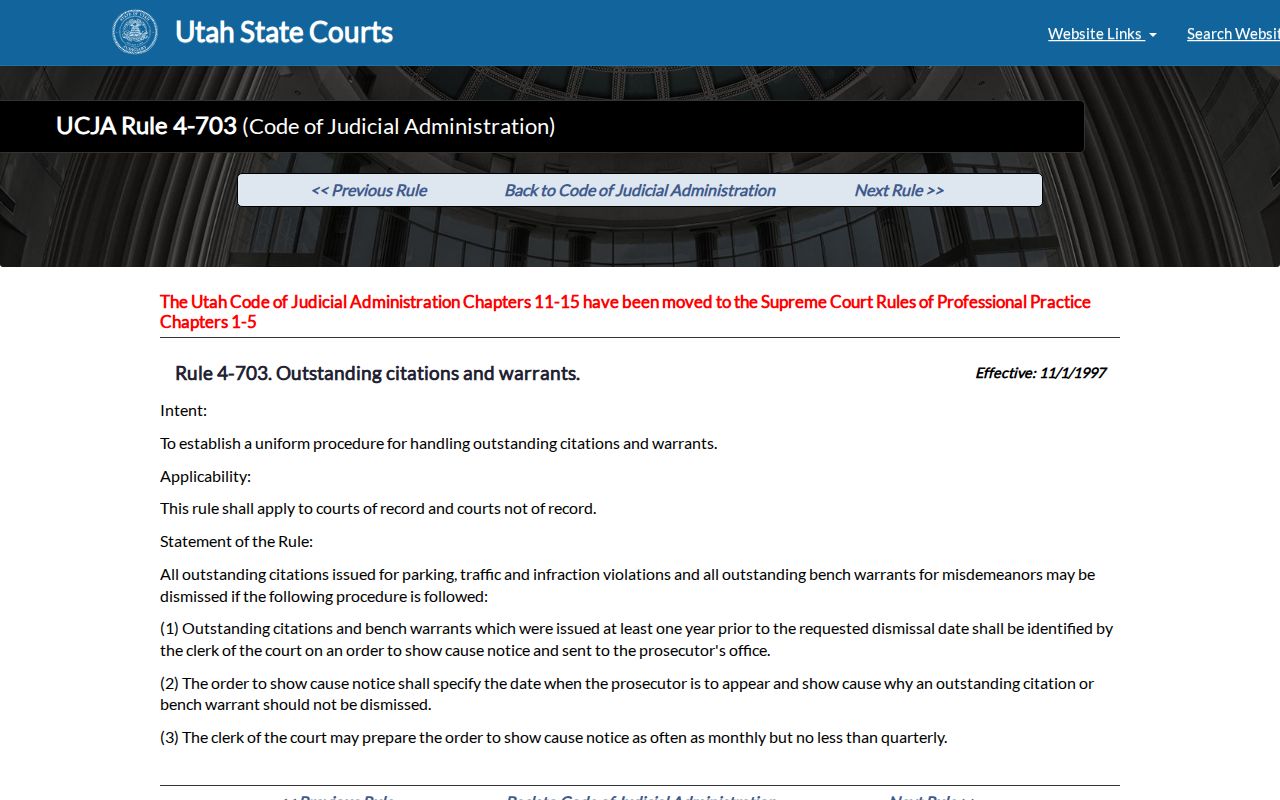
Call 435-793-2415 with a case number before relying on a general rule summary.
Resolving a Rich County Bench Warrant
Contact the issuing court and ask what it will accept. The answer may be payment, a hearing, a motion to recall, Deferred Traffic Prosecution, a plea in abeyance, or another step. Rich County posts no single walk-in bond window, online warrant payment, or universal recall procedure. The clerk's word controls.
For a criminal matter, consider legal counsel before deciding how to appear. Do not rely on an unsolicited caller's payment link or a promise that a third party can erase the court order.
Write down the clerk's instructions and keep any docket entry or receipt. A driver-license hold can outlast the court issue. Utah DLD runs a separate process for that, and the Rich County traffic warrant page explains the difference.
A Rich County Civil Case Can Also Raise a Bench Warrant
Bench warrants are not only a criminal matter in Rich County. A civil case can produce one too. When a judgment creditor opens a supplemental proceeding, the court can order a person to appear and answer questions about assets or collection. Skip that hearing and the court may issue a bench warrant, Utah Courts explains. That civil route is separate from a traffic failure to appear or a criminal arrest warrant. Know the case type before you call anyone. A civil docket, a Justice Court citation, and a District Court criminal file each carry different records and different questions, and the Utah Courts civil supplemental page walks through the proceeding itself.
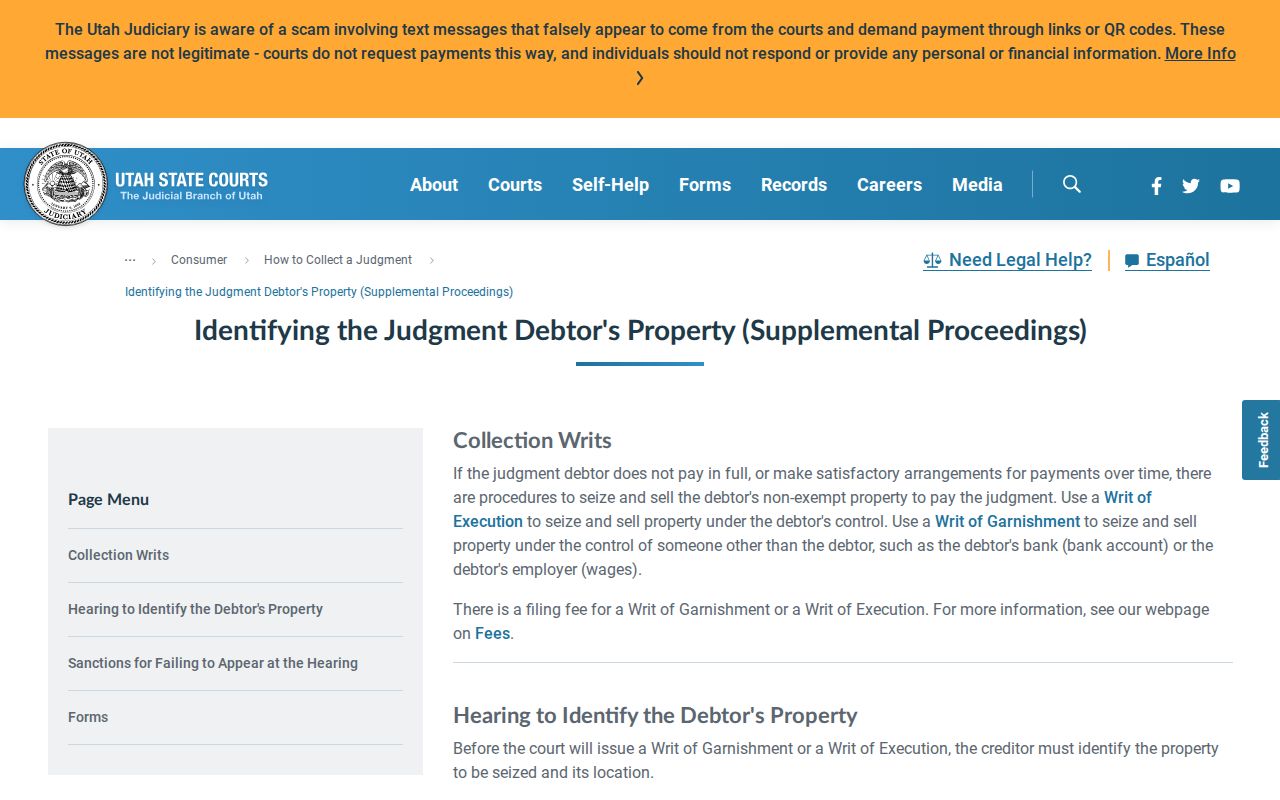
Ask the Rich County court to confirm the underlying case type before treating any order as a criminal warrant.
Finding the Court That Issued the Warrant
Rich County Justice Court handles traffic infractions, ordinance cases, and many Class B and C misdemeanors. Felonies and Class A misdemeanors belong to First District Court. Reach either bench through Rich County Court at 20 South Main in Randolph, 435-793-2415. Utah XChange can help you locate a public case. Sealed, juvenile, and expunged files will not show up there as ordinary public results. A family member should use authorized party access, or simply call the Rich County clerk, rather than hunting for restricted juvenile records online.
Justice Court
Traffic and many lower-level matters
435-793-2415
First District Court
Felony, Class A, and district cases
435-793-2415
Rich County Has No Public Warrant Roster
The Rich County sheriff posts no public roster of active local warrants. The Utah Statewide Warrants search may still return a match, though results shift as a court adds, serves, or recalls an order. A blank result does not prove a warrant is gone. Only the issuing court can confirm what stands today. Call the clerk with the number on your notice and ask. For a copy of a sheriff-held record, use the separate county GRAMA request route. That request cannot substitute for a hearing or a motion before the judge who issued the warrant.